LOG in

Food Security, National Security & the Future of Farming

Dr Dannielle Robb
Sep, 10 2026This week I attended the UK’s first Food and National Security Conference, hosted by ARK in London. It was a fascinating and, at times, sobering day that brought together voices from government, defence, science, finance, insurance, food businesses and land management to discuss a simple but increasingly urgent question: How secure is our food system, really?
You may expect, given the focus on UK food security in the conference title, a discussion centered primarily on UK food production. Instead, what emerged was a much broader conversation about resilience: resilience of supply chains, infrastructure, ecosystems, communities, economies and nations. Food security was repeatedly presented not as an isolated agricultural issue, but as something deeply intertwined with national security, climate resilience and the health of our natural environment, and it was interesting to take a moment to look at our nation with a bird’s eye view on security in the round.
Food security is not simply about producing more food for a growing nation. It is about building systems that can continue functioning when placed under pressure.
Resilience is becoming the defining challenge
One of the strongest messages came from Lieutenant General Richard Nugee, who argued that the UK has perhaps lost some of its boldness in thinking about resilience. His challenge was straightforward: if the homeland cannot withstand shocks and disruption, many other national priorities become irrelevant. That theme continued throughout the day.
Whether speakers were discussing climate change, insurance markets, geopolitical instability, biosecurity or food imports, the same concern emerged. We are operating increasingly close to the limits of what our existing systems can comfortably absorb.
Dr Kirsty Lewis, Applied Climate Science Fellow at the Met Office, set out the climate context. Three trends of which continue to stand out when we talk about climate:
- Higher temperatures
- Greater variability
- More extreme weather events
Kirsty highlighted the development of a strong El Niño event and explained how today’s background warming means the impacts could be amplified compared with similar events in previous decades. Importantly, the next 18 months may provide a glimpse into the type of climate pressures that could become increasingly common in future.
It was a reminder that adaptation specifically can no longer be viewed as a future challenge. It is a present one.
From climate risk to financial risk
A particularly interesting perspective came from Isabelle Cadignan of Howden, who explored climate resilience through an insurance and investment lens.
What is not insurable ultimately becomes difficult to invest in.
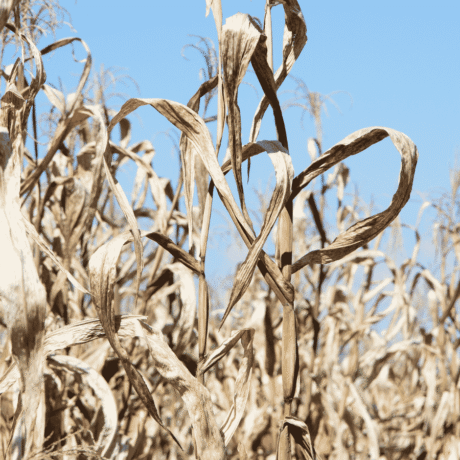
Climate impacts do not simply create environmental stress. They create financial stress. Drought can lead to production losses, production losses create financial pressure and financial pressure impacts lending, investment and business confidence.
As weather-related losses increase, questions appear around who carries the cost. While catastrophic losses are growing globally, only part of that risk is currently insured. The remainder falls somewhere else, often on businesses, landowners and ultimately farmers.
This theme echoed throughout the day. Insurance and investment are not separate conversations from agricultural resilience. Increasingly, they are the mechanisms through which change will be funded.
Why nature is becoming a strategic asset
One of the most thought-provoking sessions focused on resilience from a national security perspective. A recurring message was that the UK has historically focused more heavily on mitigating future risks than adapting to those already arriving.
Food imports, fertiliser dependency, vulnerable infrastructure, biosecurity threats and exposure to global supply chains were all highlighted as areas of national vulnerability. What really stuck with me from the day was the framing of nature as critical infrastructure. Healthy soils store water, functioning ecosystems help regulate climate impacts, biodiversity underpins productivity and natural systems provide resilience before engineered solutions are needed.
Increasingly, businesses are beginning to view these environmental assets as essential to maintaining future operations. If ecosystems fail, supply chains become more fragile and investment becomes increasingly risky. This creates an important shift in thinking. Rather than environmental outcomes sitting alongside food production, they become fundamental to it. Food security is business security, which is increasingly nature security.
Valuing what has previously been invisible
Throughout the conference there was significant discussion around natural capital and how environmental value is captured within markets.
Many speakers acknowledged the same challenge:
We expect farmers to deliver food production, environmental outcomes, climate mitigation, biodiversity recovery and water management, yet our markets still overwhelmingly reward yield and output. The question therefore becomes how environmental resilience is recognised and rewarded financially.
Several speakers pointed towards the need for:
- Better environmental markets
- More consistent policy frameworks
- Clearer incentives across supply chains
- Greater private sector investment
- Improved valuation of natural assets
Water was frequently used as an example. The cost of losing water security is enormous, yet much of that value remains absent from balance sheets and investment decisions.
The challenge is no longer simply demonstrating environmental benefits. It is translating those benefits into mechanisms that drive investment at meaningful scale.
The importance of local collaboration
Another recurring theme was that resilience cannot be delivered from the top down alone.
Revd Canon Val Plumb, representing the Diocese of Oxford, highlighted the role of communities, peer-to-peer learning and shared experience.
Across agriculture we repeatedly see that change happens faster when farmers learn from each other, see examples locally and build confidence together.
Good evidence and date remain important of course, but community remains equally important.
The most successful projects often combine:
- Practical evidence, often independent
- Trusted peer networks
- Clear financial incentives
Food security is global, not just national
Despite the conference focusing on UK food and national security, and my previous comments on the importance of local approaches, many conversations quickly expanded beyond Britain’s borders. This is unavoidable. Our food system is deeply interconnected with global markets, with many of the products we consume being produced elsewhere. Therefore, climate shocks overseas become supply chain shocks at home. Investment in agricultural resilience abroad increasingly becomes an investment in resilience within the UK.
Several sessions explored the role of international climate finance, agricultural investment and resilience-building in Africa and other regions from which the UK sources food and commodities. A recurring argument was that strengthening global agricultural resilience is not simply an act of international development. It is a strategic investment in long-term food security including for the UK, where returns can be made, albeit small.
So, what does this all mean?
It’s always good to take a step back from the day-to-day focuses and reflect on the wider situation, especially when it comes to global climate change and security. But, as always, I come home with my Ceres Research hat on (or gilet as is the case in this industry!) and start to think about what this means for the direction of agriculture, our clients and our ways of working.
First, the direction of travel is clear. We are not currently food secure in this country and resilience is as important as productivity on a global scale. Businesses capable of adapting to climatic, economic and regulatory change will become increasingly attractive to supply chains, investors and insurers.
Second, environmental performance is moving from being a compliance issue towards becoming a commercial consideration. Soils, water, carbon and biodiversity are increasingly viewed as assets that underpin business resilience rather than environmental ‘add-ons’. A level playing field for valuing these assets cannot come soon enough if we are to recognise and reward their true value fairly and achieve this at scale.
Finally, collaboration matters. Many resilience challenges are too large for individual businesses to tackle alone. Supply chain partnerships, farmer networks, catchment groups, cluster initiatives and knowledge exchange programmes all have very important roles to play.
Where Ceres Research fits in
Listening to the discussions throughout the day, it was confirmed to me how closely many of the challenges align with the work we are already undertaking across Ceres Research and indeed across Ceres Group.
Whether that is:
- Generating evidence through independent on-farm trials
- Benchmarking performance between businesses
- Supporting farmer-led innovation projects
- Facilitating peer-to-peer learning
- Helping businesses understand risk and opportunity
- Connecting farmers with researchers, policymakers and industry
Much of our work focuses on exactly the challenge highlighted throughout the conference: helping agriculture adapt to an uncertain future.
The solutions discussed in London will not emerge from a single policy announcement, technology or funding scheme.
They will require confident data, stronger partnerships, practical evidence and trusted routes for knowledge exchange. Most importantly, they will require farmers to remain at the centre of the conversation.