Monthly Digest – May 2025
Dr Dannielle Robb
May, 20 2025On The Farm Day (OTFD) roadshow!
An absolutely brilliant effort by all in successfully completing the OTFD roadshow, covering gross margin potentials, 2025 break crop considerations, SFI/Defra updates, using KPIs on farm, diversification options and the launch of the Ceres Research Membership!
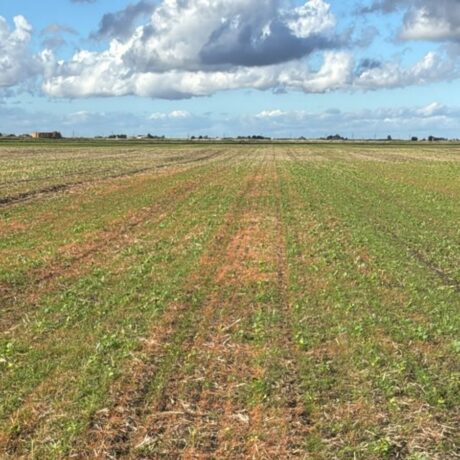
With every view from the East to the West looking something like this…

We are planning the next OTFD dates, so stay tuned!
Former NFU President Baroness Minette Batters appointed by Defra
Baroness Batters has been appointed by the Secretary of State to provide recommendations on farm profitability, in the new Profitability Unit in Defra. Minette will provide short, medium and long term recommendations and propose actions for government and industry that will support farming profitability as part of this government’s New Deal for Farmers.
Ceres Group responds to the Land Use Consultation
The government opened a consultation for the vision of land use in England and how to deliver it 3 months ago. The consultation will inform the development of a Land Use Framework.
ADOPT funding opens
Accelerating Development of Practices and Technologies Fund (ADOPT) is part of Defra’s Farming Innovation Programme, with the aim to fund on-farm trial and demonstration projects to improve adoption of new ideas or solutions in the agricultural sector. Open from the 28th April 2025 until 25th June 2025, farmers can apply for grants between 50k and 100k to support on-farm trial and demonstration projects.
Farmers can also apply for a Project Facilitator grant, to support with the process from project management to strategic insight. Our CEO, Tim Isaac, is a an official Project Facilitator. Get in contact if you have an idea!
Farming Futures R&D Fund: Low Emissions Farming opens
Low Emissions Farming R&D fund also opened on the 5th May with the aim to fund collaborative projects that will develop new solutions to support UK farming working towards achieving low emissions. These must address major on-farm or immediate post farmgate challenges or opportunities. Funding is available for project costs between £1 million and £2.5 million.
Farming Futures R&D Fund: Precision Breeding Competition open
A Precision Breeding Competition under the same R&D fund also opened on the 5th May with the aim to fund collaborative industrial research projects to unlock the benefits of precision breeding in developing ambitious new solutions leading to more sustainable and productive farming practices. Funding is available for project costs between £1 million and £2.5 million.
Heads up! Farming Equipment and Technology Fund opens soon
The Farming Equipment and Technology Fund (FETF) opens for applications on the 29th May, offering grants of up to £25,000 to help cut costs and boost efficiency on your farm. More information can be found here.
How can AI transform soil science?
The latest European Journal of Soil Science Russell Review paper was released, exploring how AI can transform soil science. Findings included:
- AI in soil science is diverse, with applications in decision support systems, image classification, prediction with machine learning and expert systems;
- AI in soil science is currently almost exclusively characterised by machine learning;
- Applications of machine learning are predominantly found in the field of digital soil mapping and for the development of pedotransfer functions (i.e predictive functions of certain soil properties using data from soil surveys);
- Most AI applications are used for prediction purposes.
The review highlights the potential of AI to support soil scientists in acquiring and analysing data, integrating and interpreting complex datasets, and identifying trends in landscapes or land management practices to inform practical decisions for optimising soil use.
Machine Learning = subset of AI that focuses on developing algorithms that enable computers to learn from data and make predictions or decisions.
Developing a multifunctional indicator framework for soil health
A recent paper develops a proof-of-concept framework that can assess soil’s contribution to the delivery of multiple ecosystem services. It does not reduce soil health to one metric but enables the consideration of trade-offs and the inherent capacity of different soils under different land uses to deliver different ecosystem services. Key soil properties, together with other environmental variables, were used to create simple conceptual models representing a causal network for soils’ contributions to the ecosystem services of climate regulation, food production, water regulation and below-ground biodiversity.

Figure 1. Soil property scores as reported in the article.
12% yield boost in wheat with sugar signalling
A new study from Rothamsted, the University of Oxford and the Rosalind Franklin Institute found that an in-field 12% yield boost in wheat was possible by enhancing sugar signalling with a novel pre-signalling molecule. That is an order of magnitude greater than annual yield increases currently being achieved through breeding.
The pre-signalling molecule releases T6P in plants which controls the plant equivalent of blood sugar. This effectively drives starch biosynthesis in the grain, forming the basis of wheat yields.
Dan Corry independently reviews whether Defra’s regulatory landscape is fit for purpose
The review examines whether the regulatory landscape is fit for purpose in driving both economic growth and nature recovery. The report argues that environmental regulation should aim to protect and enhance nature while also enabling innovation, development, and economic growth. It criticises the current regulatory system as ineffective for both nature recovery and economic progress. The review proposes five themes of reform, recommending changes that give regulators more discretion, focus on cost-effectiveness, and balance environmental and economic priorities. While acknowledging concerns that such reforms could harm nature, the review insists that the current system is failing and that carefully designed changes—with guardrails and a core focus on nature enhancement—can improve outcomes for both the environment and growth.
Bolton Review for Wales
A recent review found that the overall approach to water pollution in Wales is OK, but needs significant improvement. Polluting activities should be better targeted, there should be alternatives to blanket closed periods and the 170kg/ha nitrogen cap, and improved support for farmer decision-making is needed. The report enclosed 23 recommendations aimed to provide a more flexible, risk-based approach.
Progress in adapting to climate change: 2025
This report assesses the extent to which the UK’s Third National Adaptation Programme (NAP3) and its implementation are preparing the UK for climate change. The outcomes of the report will come with no surprises, but again bring to the frontline the importance of climate change impacts we are seeing today. The report finishes with 4 recommendations to raise the profile of climate change adaptation across government in the UK:
- Improve objectives and targets
- Improve coordination across government
- Integrate adaptation into all relevant policies
- Implement monitoring, evaluation and learning across all sectors.
Agronomy Club:
We held our first online Agronomy Club meeting on Thursday 15th May. These will be a monthly occurrence, on the third Thursday of every month. In May, we reviewed the weather, yield & quality expectations for this year, nitrogen utilisation & T2/3 applications, new season nitrogen prices, and crop rotations for next year, followed by an open discussion about these in-season topics with members.
Save the date:
Our Ceres Research Winter Conference will be on the Thursday 4th December 2025 (which coincidentally is also World Soils Day!). Save the date and we will release more information soon on the location and conference agenda.
Join us at:
- CEREALS – 11th & 12th June
- GROUNDSWELL – 2nd & 3rd July