LOG in

Digital Data in UK Farming

Dr Dannielle Robb
Oct, 30 2025As the agricultural sector faces mounting pressures to boost productivity, cut emissions, and adapt to climate change, we focused the spotlight at this year’s Agri-Tech Week with Agri-Tech E on the power of digital information to transform farm management. At Pixalytic’s online webinar alongside ADAS and Lacuna Space, Dr Danni Robb shared insights from Ceres Research which focused on the role of digital data and farm management.
From Data-Rich to Insightful
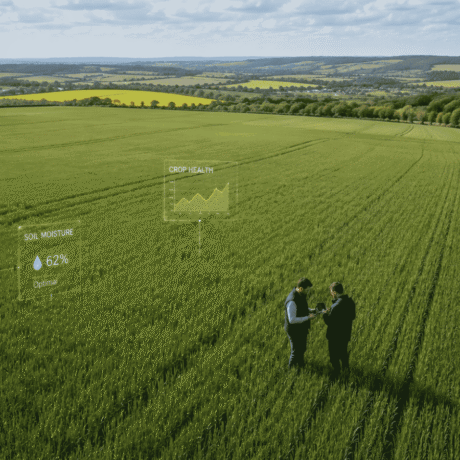
Modern British farms are awash with data, generated by satellites, sensors, machinery, and farm records. Yet, for many, the challenge is not a lack of information, but how to turn a deluge of numbers into practical, actionable insights. Fragmented systems, inconsistent formats, and limited time often leave farmers “data-rich but insight-poor”.
Integration: The Key to Progress
Danni highlighted the importance of integrating data across physical, agronomic, and financial domains. By bringing together information on everything from soil health and crop yields to machinery use and financial performance, farmers can benchmark their operations, identify gaps, and drive continuous improvement.
Key performance indicators (KPIs) and benchmarking tools are helping farms compare their results with industry standards, supporting strategic planning and day-to-day decisions. This approach is not only improving efficiency but also building resilience in the face of unpredictable weather and market conditions.
Turning Data into Decisions
The real value of digital agronomy lies in transforming raw data into meaningful decisions. Integrated platforms now allow farmers to visualise and analyse data from multiple sources, informing choices on crop management, input use, and climate adaptation. Accurate, traceable data is also increasingly vital for meeting certification and regulatory requirements, such as those set by the Sustainable Farming Incentive (SFI) and Countryside Stewardship (CS) schemes.
Overcoming Barriers
Despite the promise of digital tools, challenges remain. Connectivity issues in rural areas, lack of interoperability between systems, and concerns over data ownership and privacy can all hinder progress. Danni called for simple, localised tools, mobile-first designs, and transparent data-sharing policies. Training and digital literacy are also crucial to ensure technology empowers, rather than overwhelms, the farming community.
Looking Ahead
The future of farming is set to be shaped by improved data management, unlocking new technologies and reducing risk. Artificial intelligence and advanced analytics will increasingly anticipate challenges and suggest solutions, but to summarise the feeling on this, Danni shared a quote she came across: “Algorithms provide the insights; farmers provide the wisdom.”
As Agri-Tech Week by Agri-Tech E closes for another year, one message is clear: harnessing digital information is no longer a luxury, but a necessity for the resilient farm.
If you want to learn more about farm KPIs and benchmarking, please visit our benchmarking webinar here.