LOG in

What Makes A Digital Tool Worth Adopting?

Ceres Research
Oct, 30 2026Farmers and agronomists have access to more digital tools and data than ever before. From farm management software and satellite imagery to weather stations, crop monitoring platforms, disease forecasting tools and artificial intelligence. There is no shortage of technology promising to make farming more efficient and precise, but having access to more information does not necessarily make decision-making easier.
With time and margins under pressure across farming businesses, adopting new technology simply because it is available is unlikely to deliver much value. The more important question is whether a digital tool can solve a genuine problem and turn information into something useful on farm.
For those working in agronomy and farm management, there are five questions that can help distinguish between technology that is interesting and technology that may genuinely be worth adopting.
What problem are we trying to solve?
Technology being used in any scenario should have a purpose. So, before looking at the vast number of tools available and choosing between the options, it is worth starting on farm and identifying any stand-out problems you think technology could help with. This could be making crop records easier to monitor or manage efficiently, identifying variation within fields, or bringing information together that would otherwise sit across several different systems, thereby improving the timing of agronomic decisions.
Starting with the problem rather than the technology makes it much easier to identify what you actually need a tool to do and judge whether it is likely to add value.
Does it suit your farming system?
No two farms operate in exactly the same way. Differences in soil type, rotation, field size, machinery, labour and management approach can all influence how useful a particular piece of technology will be to the grower. Before adopting something new, consider whether it is suited to the farm you are intending to use it on. Does the tool provide information at a useful level of detail? Does it account for the variation across the farm? Is it relevant to the crops and decisions you are making?
Just because a technology has worked well elsewhere doesn’t necessarily mean it will be as useful on every farm. A good check is whether the tool has been tested in farming systems similar to yours, or whether there is an opportunity to trial it on a smaller area before committing more widely.
Does the information actually lead to action?
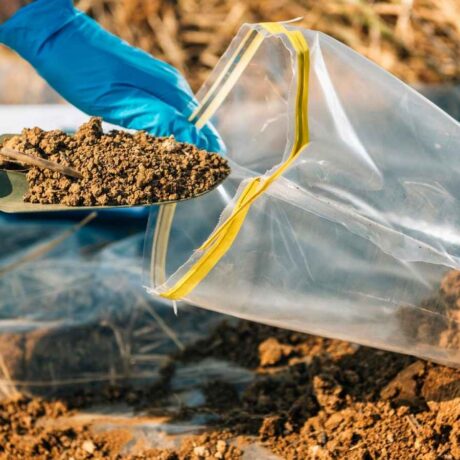
Gathering data is only the starting point; the real value lies in what you do with that information. Satellite imagery is a good example. Seeing variation across a field may be interesting, but its real value comes from understanding why that variation exists and whether anything can practically be done about it. It might prompt further crop walking, soil sampling or investigation of drainage, nutrient availability, establishment or soil structure.
The same principle applies to weather data, disease forecasting and crop monitoring. A tool becomes more valuable when it moves beyond simply presenting information and helps support a better-informed decision.
Digital tools will always complement rather than replace field observations and agronomic judgement. In many cases, their greatest value may simply be helping field teams identify where and when to look, providing data-driven insight that warrants further investigation.
Does it fit with the way the farm currently operates?
A tool can be technically very good, but it still needs to fit within the day-to-day running of the farm.
- Does information need to be entered twice?
- Can data move between existing systems?
- Can it be used easily in the field?
- Does it save time elsewhere, or simply create another platform that needs checking?
These practical considerations can be just as important as the technology itself. The best digital tools should fit into existing workflows and, where possible, replace or streamline part of an existing process rather than simply adding another task on top of what was already being done.
If collecting the data is complicated, it takes too long to interpret, or the old process still needs to continue alongside it, there is a risk of adding complexity rather than making the existing process more efficient.
Does the value justify the cost?
Cost is not just the price of the subscription or hardware, but also the time it takes to set up, learn and use. Equally, the value of new technology won’t always be as straightforward as a direct saving in £/ha. It could come through more time saved, identifying a problem earlier or providing greater confidence in the decisions being made. Being clear from the outset about what is expected from the technology supports the process of reviewing whether the tool has delivered value.
Choosing technology with reason
The question for agriculture is therefore not whether we should use more technology, but where it genuinely improves decision making.
There will inevitably be tools that prove useful and others that do not deliver enough benefit to justify their cost or complexity. That is part of innovation. By combining rigorous research capability, agronomic expertise and access to commercial farming systems, the Ceres Innovation Group aim is clear: test new tools and innovations in practical farming conditions, while remaining objective about the problem we are trying to solve.
For further information on how we test and trial innovation, you can read about our Define > Develop > Demonstrate approach here, or you can stay up to date with our latest insights by becoming a Ceres Research Member here.