LOG in

Late nitrogen – will any upcoming rain unlock its value?

Dr Dannielle Robb
May, 29 2026Water availability for meaningful nitrogen uptake
With much of the country now sitting on late-applied nitrogen, attention is turning to any rain in the forecast. Rain over the coming week could be critical in determining whether that nitrogen is actually utilised by the crop – particularly where final dressing decisions have been delayed or reduced this season.
There is a fair amount of research, including UK studies on how rainfall affects nitrogen movement, mineralisation, leaching and ultimately crop uptake. What is less common is research defining a single rainfall “trigger” for uptake, because uptake depends on the interaction between rainfall, soil moisture, rooting depth, temperature and soil structure.
Small showers (<5 mm) may limit losses but often won’t move nitrogen far enough into dry soils to support uptake. Equally, heavy downpours (>25 mm in one hit) can increase the risk of leaching or run-off, particularly on lighter or sloping ground. In contrast, steady rainfall around 20-30 mm over a week or two is far more effective – helping to move nitrogen into the rooting zone where crops can access it.
In terms of fertiliser type, Ammonium Nitrate (AN) is relatively stable on the soil. 50% of the nitrate fraction can become available once prills dissolve (even heavy dew under canopy might help), but the ammonium fraction needs microbial conversion which depends on adequate soil moisture – and so there is a limited but real window where late AN can still work if there is moisture to make the rest of that 50% applied go to good use.
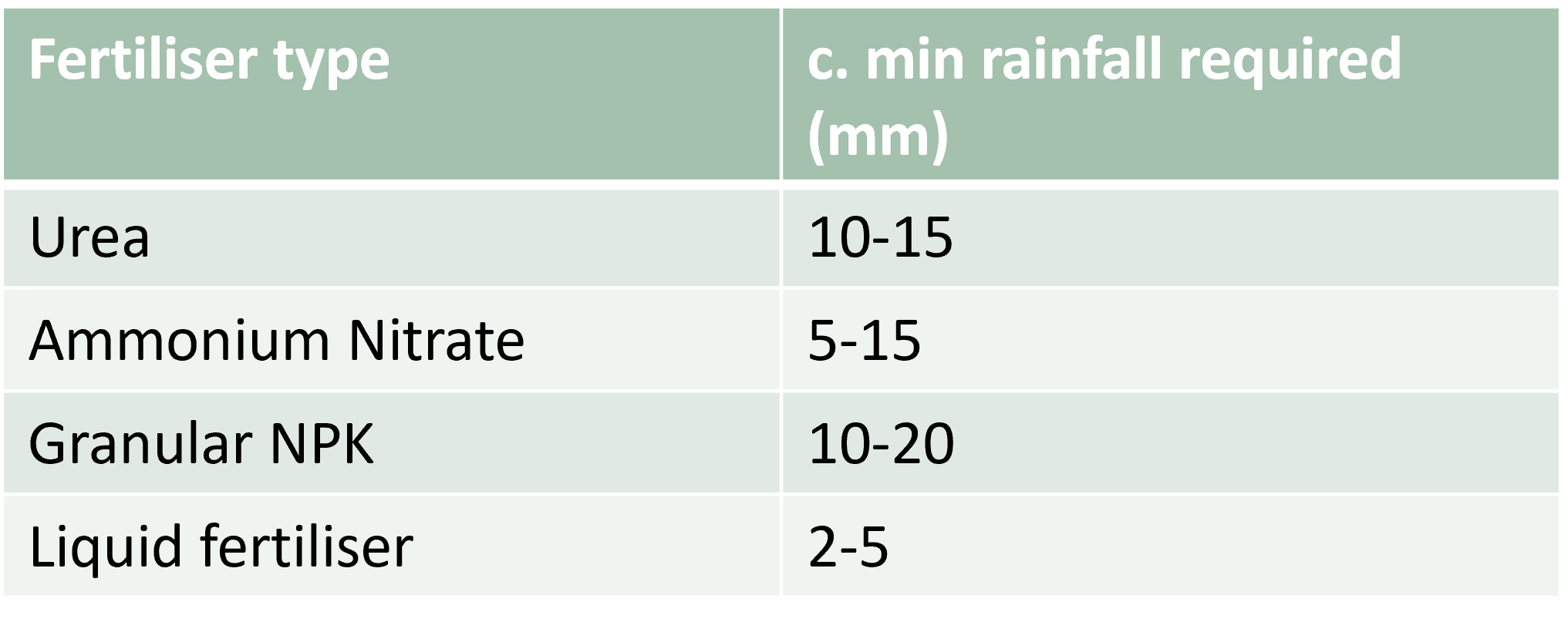
Figure 1. Summary of anecdotal evidence on minimum rainfall required for useful fertiliser applications to get into the rooting zone of the crop.
Timing matters for milling decisions
This becomes especially relevant for milling wheat, where many crops are yet to receive a final top-up. With premiums currently sitting around £22/t and nitrogen prices rising sharply (c. £470-490/t for new season Nitram – quoted 29/5/26), the margin for error is tightening.
For some growers, the decision now is whether a late application – often in the region of 30-40 kg N/ha – will still deliver a protein response. If the forecast rain materialises, there is still a window for that nitrogen to contribute. However, without sufficient moisture, the risk is that it simply sits unavailable in the soil at a time when grain fill and protein formation are already progressing quickly. In our latest members-only Agronomy Club, we reviewed historic trends to identify how rainfall timing shapes both yield potential and grain protein outcomes.
The takeaway
- Rainfall over the next 7-10 days will be pivotal for late nitrogen performance
- Crops can still respond, but only if there is already sufficient moisture to move that nitrogen into the rooting zone
- Steady, accumulated rainfall is far more valuable than sporadic heavy showers, particularly on dry soils.
After a dry spring and variable rainfall patterns, this is another reminder that nitrogen strategy is increasingly about timing with weather, not just the total applied.
More information
If you want more timely, practical insights like this, join Ceres Research Membership for exclusive access to Agronomy Club with deeper analysis and discussion. Members can access more of this intelligence throughout the season via our Insights page.